


#92: How to Write a Book About Workplace Culture


What does it take to turn years of workplace observations into a published book?
In this episode of Workfluencer, Abi Adamson shares the story behind her debut book, Culture Blooming: Nurturing Workplaces Where People Grow. From witnessing favoritism, discrimination, and toxic leadership to developing her own workplace culture framework, Abi explains how she transformed real-world experiences into a book designed to help leaders create better workplaces.
Abi pulls back the curtain on the publishing process, including how she landed a publisher through LinkedIn, rewrote her entire framework, worked through multiple drafts with her editor, and balanced personal stories with practical advice. She also shares some of the workplace experiences that shaped both her career and the book itself.
Whether you've considered writing a book, building a thought leadership platform, or simply want a deeper understanding of workplace culture, this conversation offers an honest look at what it takes to turn expertise into intellectual property.
What You'll Learn:
- How to get your first book deal
- Why you do not need a finished manuscript to approach a publisher
- What it takes to write a business book that is accessible to people with dyslexia, non-native English speakers, and first-time managers
- How to honor creative rest without losing momentum, and why forcing writing produces content that reads like filler
- How to balance personal stories with practical workplace advice
Resources Mentioned:
- Pre-Order Abi's Book: https://www.penguinrandomhouse.com/books/824116/culture-blooming-by-abi-adamson/
Connect With Us:
- Connect with Abi: https://www.linkedin.com/in/abiadamson/
- Connect with Rhona: https://www.linkedin.com/in/rhonabarnettpierce
Want to turn your team into creators?
Visit workfluencermedia.com to learn how we help companies build video-first content systems that attract, engage, and retain talent.
FAQs
What is the SERN framework for workplace culture?
The SERN framework stands for Soil, Exposure, Roots, and Nutrients. Developed by HR consultant Abi Adamson, it gives organizations a structured lens to diagnose culture problems at their root cause -- from high attrition to lack of psychological safety -- rather than treating surface symptoms.
How do you fix workplace culture problems that keep coming back?
Surface fixes do not work if the roots are poisonous. You can bring in consultants, run workshops, and refresh your values -- but until an organization honestly examines root causes like nepotism, unchecked bias, and lack of accountability, the same problems will keep growing back. Abi Adamson's SERN framework and Culture Blooming make this case in full.
What is Abi Adamson's book Culture Blooming about?
Culture Blooming: Nurturing Workplaces Where People Grow argues that organizations are living ecosystems, not construction projects. Published by Berikola with distribution through Penguin Random House, the book uses a gardening metaphor and the SERN framework to help leaders at every level understand and improve workplace culture.
Do you need a finished manuscript to get a publishing deal?
No. Publishers generally prefer to receive a proposal and idea rather than a completed manuscript -- partly because writers become too attached to their words. Abi Adamson landed a book deal in three weeks by sending a proposal after a cold LinkedIn message to a VP of editing at a major publishing house.
Who is Abi Adamson?
Abi Adamson is an HR consultant and culture strategist based in New York who has worked with companies including Google and Spotify. She is the author of Culture Blooming: Nurturing Workplaces Where People Grow and has delivered a TED talk on why culture belongs to all of us. She is originally from Lagos, Nigeria, raised in London, UK.
What are the root causes of high employee turnover in companies?
High employee turnover is often caused by problems that run deeper than compensation or remote work policies. According to HR consultant and author Abi Adamson, attrition spikes when organizations have what she calls poisonous roots -- systemic behaviors like nepotism, lack of accountability, absence of psychological safety, and leaders who block talent advancement for reasons unrelated to merit. Adamson's SERN framework identifies four key areas to diagnose: Soil (the foundational health of the organization), Exposure (visibility and opportunity given to employees), Roots (the underlying systems and beliefs driving behavior), and Nutrients (what sustains and grows people over time). Fixing turnover means treating the root cause rather than cycling through new managers, perks, or external consultants who can only address what is visible on the surface.
How can HR leaders build a more inclusive workplace culture without relying on DEI programs?
Building inclusive workplaces that outlast political shifts requires moving away from compliance-driven DEI programs and toward culture systems that embed fairness at every level of an organization. Author Abi Adamson argues in Culture Blooming that the goal is to create workplaces where anyone -- regardless of background, identity, or proximity to power -- can bring full value and be recognized for it. This means examining hiring decisions, promotion criteria, and leadership behaviors for patterns of exclusion that have become normalized. It means holding leaders accountable even when their biases are subtle or unintentional. And it means giving every person in the organization a clear understanding of the culture and their role in it. Adamson deliberately wrote Culture Blooming to be accessible to non-native English speakers, people with dyslexia, and first-time managers, because she believes culture belongs to all of us.
Learn more about your ad choices. Visit megaphone.fm/adchoices
Abi Adamson (00:00.3)
I literally saw managers blocking, like blocking someone's promotion just because it was fun for them. You're not gonna make a good leader. I'm just going to promote Joe blogs instead. I started documenting some stuff. There was one time that I think I wrote for 18 hours nonstop. Like 18 hours non-stop. I didn't want to center myself in the book. There are moments where, you know, reading through that particular part where I shared that, I'm like,
Rhona Pierce (00:21.676)
I can't wait to read the book by the way.
Abi Adamson (00:27.864)
Goodness me, I wouldn't wish that on my worst enemy, you know? We're telling one of the stories of a Muslim employee who's during the month of Ramadan, a Muslim employee asking for somewhere to pray and the head of HR saying they can pray in the
Rhona Pierce (00:30.978)
My gosh.
Rhona Pierce (00:44.11)
Everyone talks about workplace culture like it's a construction project. Blueprints, foundations, structures. Abby Adamson has spent years working with companies like Google and Spotify, and she's calling BS on that entire approach. Her debut book, Culture Blooming, Nurturing Workplaces Where People Grow, argues that culture isn't built, it's grown. But today we're not just talking about the idea. We're going behind the scenes on what it actually took to write it.
process, the craft, and the surprises along the way. Abby, welcome to Workfluencer.
Abi Adamson (01:20.142)
Thank you so much, Rona. Yay. I was nodding so like fast when you were say you know, building up that intro. I yeah. I'm very excited to be here and yeah, speaking with you.
Rhona Pierce (01:33.804)
I know, and I absolutely love your energy. I love the pink. I love everything. I met you earlier this year at Transform and I was like so excited. I'm like have to have you on the show. Okay. For folks who haven't met you yet, can you give us the Abby Adamson story in like thirty seconds?
Abi Adamson (01:54.296)
Okay, so I was born in Lagos, Nigeria, raised in London, UK. I moved to America about two and a half years, just over two and a half years ago. I moved directly to New York City. I wanted to live in two super cities. You know, New York just seemed the most New York City seemed the most obvious to London. I'm a film school baby, so my first degree was in film. I went to go and work for some big studios, and that's where I really saw, you know.
straight out of university, straight out of grad school was the imbalance of privilege, power, lots of mediocrity being held as meritocracy. And I started seeing like
What did I pay all this money for university for? For only the the child of or the cousin of or the daughter of or this connections and that connections and coming from a lower socioeconomic background, I didn't have those kind of connections to get me into places. So when I used to complain, go home, cry, complain, my mum's like, switch up. So I was like, okay, I will switch up. So I went back and went into HR.
Started from the ground up. I really wanted to be in the rooms where decisions were being made and where people like me weren't being overlooked because of our lack of connections, even though on merit we ticked everything on paper and and then some. and then I, you know, I I pivoted because I was watching nepotism and just downright nonsense.
block extraordinary people from getting to the h those higher high higher heights. And I realized that the gatekeeping wasn't accidental. it was the system working as design. So I got into this work to absolutely break those systems and challenge the status quo. So yeah.
Rhona Pierce (03:42.242)
Hey, have you subscribed? Let's fix that. It's the easiest way to support this show. Amazing. And my gosh, that moment when you realize, like, everything I've been told that I have to work hard and do this and do this is actually not how it works. It's not how it's designed to work. my gosh, we could have an entire conversation about that. But I want to start with the basics of the book. Like, what is
Culture blooming, n nurturing workplaces where people grow, and like who did you write it for?
Abi Adamson (04:18.434)
Not gonna lie. The title of that took some work. Myself and my editor at Baricola, shout out Javan. We were going through the trenches, no pun intended, going through the trenches, trying really trying to pick a a book title that I could read 20, 50 years or people could read 50 years from now and it'd still be relevant, you know? So I guess for my book, it is ultimately about, yes, that workplace cultures are not built.
They are grown, that workplaces are gardens, not stoic factories. And most leaders, most businesses are watering plastic plants, so to be plastic people and wondering why nothing grows. So this book is a way of looking at your culture as a living ecosystem. And the CERN framework, that's S E R N, which stands for soil exposure, roots and nutrients.
They work as the lens to enable organizations to really look at one of these divisions, if not all the divisions, and find where the challenges are. So yeah, this book is for everybody, whether you are a board member, whether you are at C-suite level or B VP level or middle manager or people in talent, or this is your first job and you're going straight from you know, graduate school or you're going straight from an apprenticeship.
straight into the workplace. It is for everybody because as I said in my TED talk, culture belongs to all of us, not just one of us. And there's no s no one owns culture. It is something that we all pour into. So it's for everybody.
Rhona Pierce (05:59.756)
Yes. And you also recently have a TED talk which I think is amazing to do all of this at the same time. Is it amazing? Is it?
Abi Adamson (06:10.926)
Is it amazing 'cause I lost a lot of eyelashes along the way from I don't know. I wouldn't recommend it.
Rhona Pierce (06:18.664)
No, I think it's amazing. I admire we had I had someone else on the show who did the same thing, Bobby McNeil, the same year it was last year. He wrote a book, he did a TED talk, and I was like, I admire people because I am barely surviving and all I do is a podcast.
Abi Adamson (06:37.368)
Yeah, look at my eye twitching twitching away. thank you though. Well
Rhona Pierce (06:45.474)
We we'll get into more of that later, but like, okay, so we know why you got into this work, but is there was there like a specific moment or experience that made you realize like, okay, it's time to write a book about this?
Abi Adamson (07:06.35)
I would say it was to 2018. Well, the story is in the book because that was my that was my moment. I had hired over set 60% of the workforce at this organization I was working in, and that's actually how I opened the book with this story because that's where I was like
Doing this no more no more. That was that was my moment. I was like, no, I've got nothing I can't give from an empty cup. I can't pour from an empty cup. But I I hired about 60% of the workforce, including my actual manager. I had hired my manager into the business. we were opening a division in America. So this was when I was still based in London, and considering I was doing all of the talent acquisition for the organization, including.
Hiring one of the leadership teams. I mean, someone who had influence in the business, second to the CEO, basically. Also hired them in. And the opportunity came up to hire for the American, for the American team. And my boss was like, my boss, my CEO chose my manager to go. My manager hadn't hired anyone, right? I had hired the person.
the all the people into the business. And I was, I mean, everyone could feel this was an open plan office. I was furious, rightly so, right? Because I had been overlooked. What upset me wasn't even necessarily I mean, that upset me. What upset me was what my what my CEO said to me afterwards. they took me to to breakfast because I was I was like a tornado, a very silent tornado in just sitting in that corner fuming. Took me to breakfast and was just like, Abby
Yeah, so you know, just very nonchalantly. We're not sending you to New York because you wouldn't have got that person over the line.
Abi Adamson (09:03.478)
I was like, And there was that. Sorry, I get I still get I it's been like it's been eight years, and I'm still right. It still takes me a while to to pause. And that was the moment, honestly, Ryan. I remember I could see my reflection in the the mirror because we was we were sitting next to the door. I could see my reflection. And I remember looking at my reflection saying,
To myself internally, whilst he was monologuing, 'cause I don't even know what he was saying after that because I'd zoned out. And I remember saying, Abby, no matter what you do, you will never be good enough in this business. You will never be good enough. There's just nothing, there's nothing else. Do you you have you have gone, you have smashed every type of KPI they have put in front of you. You have smashed
Everything, every type of s analysis, every type of hurdle, every type of even unfair hurdles that were put in front of me during my performance reviews. Things that I'm just like, this is this, you wouldn't do this. Bearing in mind I was the only black person in the business. That I I need to mention that because that was a a thing. I was the only black person in the whole business at that time. I've
And that was it for me. And after a few weeks later, I res I you know, tended my resignation. But that was the moment for me where I'm just like,
You know, I still went to go and work for two other companies after, but even then I think I lasted one of them and this is I don't want to give it away because this that particular one is in my book. One of them I lasted nine weeks. I was like, absolutely not. And the other one I lasted just shy of a year because COVID COVID had hit. But those two organizations that I joined after that big one where I'd spent, you know, all over three years, I just knew I just I didn't have it in me to go and work for anybody else. I didn't have it in me to
Abi Adamson (10:49.666)
be begging for scraps. I didn't have it in me to work five times harder than everyone else to not even move an inch forward. I didn't have anything left to give anybody, including myself. and I remember when just before COVID hit and I left that the that business, I was very upset. I lived to my friend Tolu at the time. She shouted out in my book because she's a big reason, you know, a big catalyst to me believing in myself. I remember I could not get out of bed for the best part of
Easily a week and a half, easily 10 days. I was just feeling sorry for myself. And I remember she came into my bedroom. She was like, Abidamy Adamson. You need to remember who the F you are. And you need to stop feeling sorry for yourself. You don't need these organizations. You can start your own thing. You see how people are reading your posts on LinkedIn. You see how people send you messages and ask you for your expertise. You can do this on your own. You do not need the man.
to be able to get you places and the rest as they say is history.
Rhona Pierce (11:54.498)
Did you always know you were gonna write a book?
Abi Adamson (11:58.986)
not necessarily, to be honest. I knew I I the book I always wanted to write was was two things, two books. I love poetry. So I wanted to write a poetry book as the firstborn daughter of a of an immigrant household. I wanted to write a love book, like a love story. Not story, love poetry book to firstborn daughters of ethnic backgrounds. Not just any ethnic backgrounds, because
Being from an immigrant or an ethnic background as a firstborn daughter, it is very different. It's very, it's very that that's whether you're African American, whether you're African British, whether you're Caribbean, whether you're Indian, Pakistani, Chinese, it whatever, you know. we set tend to have a universal universal thing that we all go through. So that was what I really wanted to write.
It's when I started becoming a consultant and working for all these big companies, and even the smaller, smaller companies, and I started seeing all of this bad behavior from leaders, from middle managers, people I literally saw managers blocking, like blocking someone's promotion just because it was fun for them. I've I've I mean I I've seen it. I've witnessed, I've witnessed managers say to the only
Woman on the team, like, mm, you're not gonna make a good leader. So therefore, I'm just going to promote Joe blogs instead. I I I've seen that. And, you know, I started documenting some stuff as I went along along the way. And it got to twenty twenty two. and then I just started I just started typing one day. I started typing and and then I was like, this this
This is a bit sloppy, but this looks like it it has i I can do something with this. and and yeah, so that's how it happened.
Rhona Pierce (13:57.72)
So you started typing, you had everything, like what was the process of like, okay, now I wanna make this a reality. Let me go find someone to publish this for me. Like, what was that?
Abi Adamson (14:11.768)
So I I actually didn't know how to do it. I spoke to a few people who had been published a few times. They they, you know, Mita Malik, I'm gonna shout out Mita, fantastic. you know, do you know Mita Malik? You know her, yeah, Mita Malik is fantastic. she we spoke and she was just like you know, I spoke to her, I said, Hey, I I I would I've got this idea for a book. and
Rhona Pierce (14:26.934)
I know of her, yeah.
Abi Adamson (14:41.08)
I've got this framework and I really want to publish it. I don't want to go. I knew I knew I definitely did not want to go down the self-publishing route. And honestly, Rona, it might be my own ego. I was like, I would rather wait for the right publisher than just go and self-publish. You know, I I I believe in what I have to say. Now I had three publishing companies approach me separately on LinkedIn during this. They three of them. And
I just didn't want to go with them because I'd heard different stories about, you know, sloppy editing and stuff like that. And I was like, mm, they're not for me. I need someone who is going to be militant about my book. I need someone who's going to love it as much as I I did. And I and I I I mean, I wouldn't recommend this. Fortune favors the brave, but I wouldn't recommend this because I can imagine I know my my editor's gonna be like, I mean, why in God's name, would you say that on on a on a podcast? But I
Slid into his DMs on LinkedIn. I was like, I'm gonna shoot my shot. The worst he could possibly say. This is the VP of editing, by the way. Who who I he probably gets accosted like 400 times a day, you know? I was like, he ain't gonna see my message, much less reply. He replied back in three minutes. Three I stuck I I screenshotted everything so that I can always remind myself. He replied back within three minutes saying, Love this idea, send me a proposal.
Rhona Pierce (16:09.378)
Yeah.
Abi Adamson (16:09.994)
And I swear to you, and that's that's honestly how it happened. Now I did tell one of my friends who also slid into the DMs of another of another of another editor, she didn't quite get the same response. So that's why I said, look, it might not have worked for everybody, but I believe heaven ho heaven helps those who help themselves and fortune favors the brave. The worst that could have possibly happened that day is no thank you. This isn't for us, you know.
But yeah, and then within me sending over the proposal all and and me receiving my contract, it was three weeks. Wow.
Rhona Pierce (16:48.664)
I love this story because so many times I mean, yeah, you always think about it and you think it's gonna be this long thing and like and I don't know, you can tell me if you ever thought like, well I have to do X more or I have to do this, I have to achieve this before I can pitch a book to someone.
Abi Adamson (17:05.812)
100%. So so I mean, one of the things I didn't know, and this I will say because for all those budding authors out there that didn't know this, I thought you actually already have to have something written before you before you approach a publisher. I didn't realize that actually they don't like things being written at all. They like the idea to come and then you create it together. And the reason for this is because people get attached to their words. You know, people get attached to something. I it took me about two years to write, to write that book.
And when I had, you know, presented it, it was, it was, mm, this is nice, but mm, we're gonna have to change and call quite a bit. And I was like, And that's the reason why they don't want people coming with something already, already said. So that was the biggest thing that I learned. Well, I've learned quite a few things, but one of the big things was to come with your ideas and an open mind. fortunately, I wasn't
locked in. I was locked in in in how I wanted the story, but I wasn't locked in in the journey of the story. And I wasn't too I didn't you know, I wasn't even though I'd it took took me two years to write, I wasn't invested to the point where I wouldn't trust what my editor was saying sells. So one of the big things that we had to change was the language. So it was reading of course I wrote it before political powers changed. I wrote it before there was this
Animosity using diversity, equity, and inclusion or DEI. You know, I I wrote it before I, you know, the first iteration was before they became dirty words, where they became before they became bastards, you know, before before before people had to walk on eggshells around being invested in inclusion and wanting the best for their people. I never thought we'd be at this it's it's so wild that.
Rhona Pierce (18:53.386)
Exactly.
Abi Adamson (18:56.566)
You saying that you care about equity and care about having a diverse organization and care about people making sure that they're included and have psychological safety and feel a sense of belonging. Before how did we get to a point where all of those things were bad, you know? so one of the things that I had to change when I was rewriting it was the language. What what I definitely did not want the book to be about. There's a lot of diversity, equity and inclusion books. There's a lot of
those kind of books out there, I didn't want it to be about identity politics. I was very adamant that I wanted a book where you could be a black man from the rural South in America and be a CEO earning 60 million a year, go skiing wherever they ski, and go golfing wherever they go.
And be able to pick this, we could both be able to pick this book up and know that it speaks to you. That was really important to me. That regardless of how you identify, regardless of your background, regardless of who you are, you could be from polar episodes of the world, but picking culture blooming up, it speaks to you. And that was that's how I wrote the book. That regard you could be the only woman in your business, you could be a queer person.
Didn't matter. You could be a VP, a board member, or graduate, or a janitor. Doesn't matter. Every single person in an organization has a part to play. And I wanted people to be able to read that book and see what power that they had.
Rhona Pierce (20:37.314)
I love that. I love that. And I and like so many people will tell you, no, your whatever you write has to be to one audience or whatever. But I think when you're writing about culture at a company and like just in general, what you're writing about, yes, it has to be for everyone because that's the entire point. When you were writing culture blooming, like walk me through the messiest chapter to write. Like, what did you delete?
Abi Adamson (20:56.087)
Exactly.
Rhona Pierce (21:05.494)
Argue with yourself about or like almost leave out.
Abi Adamson (21:10.616)
The messiest, the hardest chapter for me was the roots chapter. That took me the longest. by the way, from when my editor was like, pretty much I had I had three July August. I had four months to write the whole book. Wow. Yeah, I and and I mean rewrite the whole book. And we had to and we changed the framework because initially the framework was C I B E, which was culture, inclusion, belonging and equity.
My editor was like, no way, that's just not it's no so we have to find another way to do this. So so we came up with this with the CERN framework, which was soil exposure, roots, and nutrients. And then I had to rewrite, he said, You have 40,000 words. You need to get this. I want 40,000 words, no more than 40,000 words, because this is a business book. We need it to be straight up. We need these people people that are reading this book are busy.
They need you to get to the point very quickly. None of this, la la la la la. They don't have time for la la la la la. You know, when they're going through acquisitions, when they're going through hi, you know, fast and furious hiring higher hiring phases, they don't have time. They need to be able to read this quickly. So that was another thing. So my the there are only six chapters in this book. So there's the introduction in six chapters. So you've got the intro, then you have soil, then you have exposure, you have roots, you have nutrients.
You have Weathering Storms is chapter five, and then you have The Bloom, which is the final chapter. Six. The hardest one to write was roots, because we are talking about root causes of why your organization is upside down, root causes of why you have attrition rates through the roof, why people just keep leaving, why you're hemorrhaging the best talent. Root causes of why you cannot retain great talent once you've hired them. Root causes of why the same people keep getting
they keep getting promoted. Root causes of why there's no psychological safety. Root causes of why there's no trust in your organization. Root causes of why there's lack of accountability in your organization. That was the hardest. It took me out of the four months. I think that one took me, I'd say about two months to write. You think I've got four months. It took me two whole months to write that one.
Abi Adamson (23:36.8)
And I remember, I remember being quite nervous actually to send it to my editor because I was sending him chapter by chapter. And he was like, Hello, where's this what's the third chapter? I was and I was like, so it's not ready. And he's like, Abik, Abic, the deadline is approaching. We need I need this. Bearing in mind I still have three more chapters to write. And I remember when I sent it to him and I was quivering and my friend Cindy was like, Abs, you're gonna be okay. I'm like, well, Cindy, I don't care if I'm gonna-
And he sent me back an email. He said, and I think I just again I kept it. I think it just said the best chapter yet. Well I was like, huh? I was like, I was I was like, are you pulling my leg? He was like, this is the best chapter yet. I was like, no, it's not. Are you kidding? Like the roots, roots was not roots, soil was phenomenal. That was he was like, This is the best. I also had one of my friends
He's in London, he's a lawyer, but very much invested into this. So I had him be one of my like a another person to read through as I was going along. and he was like, This is this is it's this is the trickiest one to read for sure, but this is definitely the the deepest one. And I said, Do you like it? He said, This is this is brilliant, Abby. He goes, for me, this is my best one, and bearing in mind they didn't know they don't know each other.
I was like, So it's gonna be very interesting if this is the this is the chapter that people resonate with the most because again, we talk about soil and you know how your your soil is is obviously going to then how healthy your soil is is where where the things grow. you know, how you the exposure to the sunlight the flowers get, the sunlight obviously helps with growth. But your roots is if you're poisonous in the roots, the weeds, even if you
Chop the weeds off, but you don't treat it, re they'll keep weeds will keep growing back. So so for me, it was really that for me was the the chapter where I'm like, I need this to land. I need people to understand that you can't just get external consultants in. Even myself, don't just hire me to come into your organization if you're not going to treat the root cause of your problems. It will always be there. You can have a, you know, all these big management consultancy companies come in and do all their things, but you still have the same problem.
Abi Adamson (25:54.824)
and I think another part that was really difficult to write for the book was towards the end where, you know, I've I've set this up and I and I'm saying to people at the end that there will be organ and this was a this is I suppose a hard thing, truth for me to for me to admit out loud in a book, is that there will be some organizations that don't care about you. Yeah. There will be organizations where no matter how much you pour into them,
They're not going to pour back into you because all they care about is the bottom line. There will be organizations that they don't care if they make 400,000 people redundant. You are just a number to them. And that actually was hard to write because I want to be able to say that there's good in all businesses, that all organizations, that they they will they will always be for the people. But that's a fallacy, Rona. And it would be
It would be remiss of me, it would be contradictory and hypocritical of me not to admit that. yeah, so that was a that was a hard pit to admit a hard part to admit.
Rhona Pierce (27:03.072)
Yeah, I mean, I I'm surprised I can't wait to read the book by the way. I'm surprised that you were able to fit all of that that you were talking about into one chapter. I think was was that a part of what like was making you making this so hard to write? 'Cause that's a whole book right there.
Abi Adamson (27:24.678)
Exactly. And that was what and we, you know, we had to be very I said it's about 40,000 words. So we're talking about 7,000 words per chapter. That's not a lot. I I think another thing was the there were moments where I did cry quite a bit because I didn't want to be vulnerable in the book because the book is not about me. That was really important. It's like I didn't want to censor myself in the book. But at the same time, you know, my friend was like, I mean
People need to know that you're speaking from experience as well, not just as a consultant who is a third party to these organizations and you go in with all of these you know, solutions to their challenges, but also as Abby the employee, what Abby the employee has had to go through. You know, that organization where I where I lasted nine weeks, there there are there are there are moments where, you know, reading through that that particular part where I shared that.
I'm like, goodness me, I wouldn't wish that on my worst enemy, you know? And that was difficult for me to write because I don't want to this book wasn't about me and I didn't want to allow that kind of vulnerability. You know, the only people that saw that was Tolu, who I lived with, and my parents, you know, and and my siblings. And that that was enough. Even that was too much, you know. That was even that was too much. So to have hopefully hundreds of thousands of people read this book and be like, oof. that
That was tough to be able to share the kind of sexism or racism that I had witnessed other people go through. I retelling one of the stories of a Muslim employee it was during the month of Ramadan, a Muslim employee asking for somewhere to pray, and the head of HR saying that they can pray in the toilet to go and pray in the on the floors in the bathroom. Yeah, retelling that kind of story, that those are the points that were difficult because I
It just transported me back to those times where I'm just like, I cannot believe that and I remember saying to to that H head of head of HR, head of HR, because we shared an office, saying, You cannot you cannot ask someone to go and pray on a dirty bathroom toilet. And I remember her turning to me and saying, We don't have to provide anything to those people. I'm like, Yeah. I'm telling you, like there's parts of the book where I yeah, this yeah. And I'm like, Goodness me. and again.
Abi Adamson (29:49.72)
The the bad behaviors that I saw from people who should know better, the people who are supposed to be in places to protect I know HR is mainly to protect the business more than the people, but that doesn't mean your duty of care should ever lapse, you know? And to see that to see that nonchalant disrespect, the the flagrant vitriol, the flagrant visceral reaction at someone
having a faith that is different to yours. I I I'd never seen anything like it. And I've seen and I have seen some terrible, terrible behaviors from HR. I have seen some terrible behaviors from people managers. But that that was one that I did share in the book because I needed people to understand when we talk about psychological safety and a lack of belonging, these are the moments.
Rhona Pierce (30:39.662)
my gosh. And yeah, everyone likes to say HR is there for the business. Everyone's there for the business. But at the end of the day, like if you're acting that way, you're not there for the business. Because that's going to affect the business and everything that you do. Because just that mentality, just I mean, I wouldn't even allow myself to think that way. So the fact that
It was said out loud. That's like, I mean, anyone listening, if you want to see my reaction, go to the video version because it was like
Abi Adamson (31:12.686)
Yeah. It was it was it was terrible. It was and that was that was the norm. That was the things that I would see. You know, I was, you know, eating sushi, one of these organizations that I didn't last very long and eating sushi and having bearing in mind I was head of people on talent. So I was on the leadership team. Yeah. And so it's you know, people think that bad behaviours only happen when you are maybe towards you know, your your
The lower ends of the business, so to speak, lower, quote unquote. Yeah. but this is me in an influential position. This is me in a hiring and firing position. This is me in a position where I am leading a whole department and I'm eating sushi one day, and one of my colleagues, minding my own business, listening to music, listening to Spotify, on my lunch break, and one of my colleagues comes along and says to me, I didn't realize, you know, you people eat more than fried chicken.
Abi Adamson (32:13.496)
So Yeah, that's in the book as well. That that's in that yeah, you know, of and it's again I it's funny 'cause when I handed my handed my no notice in after nine weeks of being there, I remember the CEO going, What what did we do wrong? I'm like, what did you do write? What did you do right? Is it asking me about marijuana and I'm telling you that I've never smoked before and you're telling yeah, but you're black, you're Jamaican. Don't all Jamaican smoke marijuana as a right of passage.
Rhona Pierce (32:31.246)
Okay.
Rhona Pierce (32:43.255)
No. I can say no, we don't. my god.
Abi Adamson (32:47.01)
And and it's like, well, number one, I'm not Jamaican. Number two, even if I were Jamaican, that is the most asinine thing I think I've ever heard in my life. But these and you know, these are these are the things. Is it you, the CEO, shouting at me in front of everyone across the table, across the across the I mean, it just the it I just knew that I could not go back and work
work for someone else again. And I've always said that. I I don't like to s I don't like to speak in absolutes. I don't like saying I'm never going to do something again because you just never know. But I did say if I ever do go back into the workplace as a W-2 employee or as an employee as us we us bricks don't say W-2, but for the American audience. I will have to be sitting at the right hand of the CEO. And I mean pretty much the CEO.
Pretty much just where no one can say ish to me, you know? because I just can't I I don't have I don't have it in me, Rona, to go through all of that again. And I wrote this book so that I would never have to, so that people know that they're not alone and they're not they they're not I they shouldn't gas the gaslight themselves, you know? They're not alone in how they feel. And and I want
I want the people, especially those who don't have proximities to power, who are not high up in the organization, to know that they hold so much sway in how an organization is, because as the the African proverb, if you do not hear, then you must feel. And when you start leaving, when people start leaving a business and you're losing good talent, and we know how much it how it costs thousands, if not h tens of thousands, if not hundreds of thousands, depending on the organization.
to replace to replace an employee. If you start doing that in droves, trust me when I say even the worst of the worst leaders will will start paying attention.
Rhona Pierce (34:42.762)
And I I totally understand you not wanting the book to be about you and stuff like that. But I'm glad that you added the stories because this same reaction that I'm having, and I a hundred percent believe you, of course, ever I'm a black woman, I'm an immigrant, like I have these stories or similar ones, but so many people, especially the people who the system is designed for.
They don't experience these things. They don't see these things. And I think a book would land and will land so much better when someone can be like, wait, what now? What happened? That happened? And it's like, it's not just an observation from a consultant. It's like, no, it happened to the expert, the person coming in to help with these things. Like, no, I think that is so powerful. So I'm so glad.
that you incorporated stories. And I mean, everyone knows I'm a fan, a huge fan of storytelling. So I'll always be happy when someone incorporates stories. Can you kind of walk us through the the the actual process? Like were you writing every day in chunks when inspiration struck? 'Cause it's like four months. Wow.
Abi Adamson (35:46.178)
Yeah.
Abi Adamson (35:59.466)
Yeah, so I think
I I pretty much was writing every day. I mean there were there were moments where like the nutrients chapter, I was able to power through that very quickly. Roots was Roots was definitely the hardest. I was pretty much writing every day and there will be moments where I would write for 36 hours straight. Like there was one there was one time I wrote for, I mean I mean straight, of course I did sleep, but there was one time that I think I wrote for 18 hours non-stop. Like 18 hours non-stop.
until until, you know, I started the words started moving on on the page. I was like, okay, like things are now moving on the page. I'm like, this is the good Lord is saying you need to go and sleep. but yeah, I was right. And then there were some days where I had I'm gonna lie, I had zero motivation. Nothing came to me. And I didn't wanna just write for the sake of writing. I didn't wanna just I didn't want any filler. There's no filler in the book at all. There is no filler, there's no duplicates. I didn't wanna just
Just, you know, f especially because well, there couldn't be any fill-up because I only had 40,000 words. So it was so the word count was so strict that I I had to make sure that there's no fluff. So on the days where I was not motivated, on the days where I just wanted to Netflix and chill, I would I would honor that. If I woke up in the morning, I'm like, okay, you know what? I I can't I can't do it today. I would honor that. I never forced myself. That was one thing. I never forced myself once to write.
Because I just don't think it makes for good writing. When you when you when it feels like a chore, I enjoy writing. I love it. It's my outlet. Just like a, I suppose it's a different type of art, just like a artist will take a paintbrush to a canvas and and you know, go wild. That was my thing. You know, everything from writing my pieces, my think pieces on LinkedIn to writing pieces on Substack. So it's just my outlet. But I never force myself. Normally, actually, someone sent me a message on on LinkedIn today saying,
Abi Adamson (38:01.474)
You've been you've been rather quiet lately on LinkedIn because I post every single day. And the the reason why I'm quiet, I don't use AI to do anything. I write everything from scratch. And I said to them, I'm just really tired. I've just moved apartments and honestly there's nothing
that's come to me to to write about right now. So I'm just enjoying my new apartment and just chilling. And once I have the writing bug, it will all come back to me. but for now I'm just relaxing. They're like, okay, sorry to bother you. It's just your morning your morning posts are what I start my day with. And that's really yeah it was so sweet. I was like, I'm so sorry. I will be back. I'm just not very motivated and I like you to read, you know, original think pieces that are not just fodder. So that's quite important to me.
Days that I wanted to write, I wrote. Days that I didn't, I didn't.
Rhona Pierce (38:47.438)
I love that. And I think that that really comes through with the right. You just have to honor how you're feeling. And again, it's like you can't force it because it will feel and especially in something so important as a book. It's not like social media where it's like, Okay, I get another chance tomorrow for this post. It's like it's a book, it's there, it's in print. You want it to be the best work that you possibly could have done.
Abi Adamson (39:15.156)
Once it goes out, it's out, you know. once it is out, it is out. So for me it was, you know, there are there are parts and and you know, with my e what was good with my editor is that there's maybe only maybe three moments in the whole book where we disagreed. You know, where he was like, Mm, I don't know if we need this part. I'm like, No, actually we do, because th we we do need this part Or I'll say, you know what, I don't think we need this part. He's like, No, actually we do You know, so that
But all in all, it and he actually said to me, like, this has been, you've been such a joy. You are so relaxed. And I said, I'm not bigger than my book in the sense that I have no ego. Do not send me out. And my thing, I s one of the things I said to him at the beginning of this process is, do not send me out into the world looking crazy. Do not do even if I throw a tantrum, even if I say, Are you not listening to me?
You've got to remind me that you are the expert. You've been doing this for 25 plus years, right? You know what good looks like once it hits the shelf at Barnes and Noble or Waterstones or wherever it's going, you know, or or Daunt Books. You are the person. So when people, many hundreds of thousands of people are going to pick this up. They don't know who I am. They're going to make a beeline for my book. And I need them to know that their $20 or however much they paid for it was worth it.
And not but most importantly, and this was the biggest thing for me, Rona, is when they put the book down, they can start implementing the framework immediately. That was the b I'm not writing a book for book's sake. I it was a book where it is a book where you put it down. You know, there is a framework in this book that is not gate, I did not gatekeep it. Obviously, there are things that come from there that people book me for, but in regards to d using the framework, that is
for you the reader, you the leader, you the organization, to pull out and then place into your organizations. Now of course you can hire me and I I I know my framework better than anyone else. But also, if you're a small business or you're new or you only got five employees and you can't afford a consultant, that shouldn't be a reason as to why you can't set yourself up for success. And that's what this book is for.
Rhona Pierce (41:24.482)
Those are the best books. I mean, I've recently hired someone whose book I read. I implemented everything in the book and it worked until a certain period in my business where now I'm like, okay, now I have money, thanks to what I learned from your book, to hire you. And I'm gonna hire you, the person who did gatekeep, the person who I already know helped me. So a lot of people think like, I can't put all of that out there. No, you absolutely can and should help people.
They will hire you when they can, or if they c never can, they'll tell someone else about you because they got more than just fluff to read for the weekend on their vacation. It was like an actual thing they can go implement.
Abi Adamson (42:08.266)
Exactly. That's what people want with famous books. Exactly. And what and unto that point, I also wrote, as an academic, I know that sometimes, you know, you can get caught up in fancy long words and all of this stuff. Is I wrote it in a way that I wanted it to not be an academic book. I, you know, not everyone has gone to higher places of higher education, you know, higher institutions. No. I wanted it to be a book where it was
As someone who's not dyslexic, for example, my mum is dyslexic, and I was like, Mom, let me know, can you read this? And she'd be like, this this paragraph is a little bit more ch is a little bit challenging. I'm like, okay, too many ridiculous words that we don't need. Let me strip this back, you know. And I've really wanted it to be a thing where if you are not neurotypical, you can pick up this book and be like, I understand how to do this. You know, it was r again the language of the book and the kind if your English is not your first language. I want you to be able to pick this book up and understand it.
All of those things I was very hyper aware about. I didn't want it this to be a book that is just rolled out into higher, of course, use it in higher in higher educational institutions, great, but I wanted this book to be for that new brand new manager who's just been promoted as now now has three three people who report into them and they're like, I don't know what to do with these three people. Like, what do I do? but they might not want to read a real, you know, a war and peace type of type of book. So, you know, picking up a
Tour story novel or something like that. No, or Charles Dickens novel. No, they want something very straightforward. So I wrote it again in with the simplicity of being able to understand this front to back, back to front, seamlessly.
Rhona Pierce (43:51.274)
I have I'm so excited to read this book. Like I was before while I was researching and now after speaking to you, I'm like, I need to read this book. When is the book gonna be available?
Abi Adamson (44:04.246)
It's going to be available on August 25th. it'll be out. loads of pre-sales are already out, so you can go on to Amazon, Barnes and Noble, Penguin Random House, Penguin Penguin Random House, shout them out. They are my distributor, Beric Cola are my publishers. You can obviously buy from them as well. yeah, it is it is available. It is it is out there, pre-sales, and then it should be shipped out.
in time, otherwise it'll be shipped out on the twenty fifth and you should be receiving it within a few days of that date. So yeah.
Rhona Pierce (44:40.046)
Amazing. And I'll add all those links to the show notes as well. I've really enjoyed this conversation. How can listeners connect with you?
Abi Adamson (44:50.958)
With me on LinkedIn, I am Abby Adamson. Collect with me on Substack. Substack Abby Adamson or Culture Blooming. those those are the I mean you can connect with me on Instagram. I don't really use it that much, it's just I just browse it and just you know laugh at animal videos mainly. One on using using that, but definitely LinkedIn. you can hit the culture partnership.
dot com take you to my website. You can also put abbeyadamson.com that takes you to my other website. so just or just Google Abby Adamson. I'm sure I'll pop up somewhere, but you can definitely, definitely reach out to me on LinkedIn. You will come through to me straight away.
Rhona Pierce (45:30.862)
Amazing. Thank you so much for being on the show today.
Abi Adamson (45:34.904)
Thank you, thank you, Renna, for inviting me, such a pleasure.
Rhona Pierce (45:37.964)
If you're enjoying the Workfluencer pod, share it with someone who's changing how we talk about work or who should be. And hey, if this episode gave you ideas or inspiration, leave us a five-star review. Reviews help other listeners find us. And honestly, it makes my day. This show is produced by Workfluencer Media. Visit WorkfluencerMedia.com to learn how we help companies build video-first content systems that attract, engage, and retain qualified talent.
That's Workfluencer Media dot com. Thanks for listening and I'll chat with you next week.
Workplace Culture Consultant
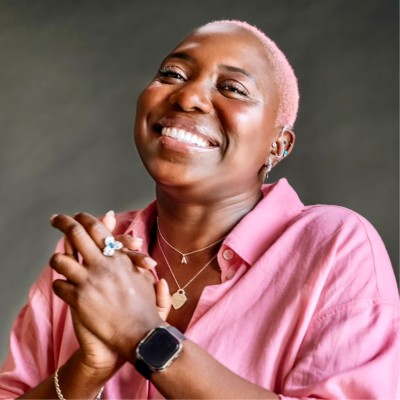
Abi Adamson, Founder of The Culture Partnership and creator of the SERN™ Framework, is recognised as one of the UK's Top Workplace Culture Experts (Favikon, #6) and a Thought Leader on LinkedIn by The New York Times. In 2025, Abi delivered her first TEDx talk, "Who Owns Culture?", and her debut book "Culture Blooming: Nurturing Workplaces Where People Grow" launches August 2026 with Berrett-Koehler Publishers.
Having partnered with hundreds of organizations globally, including Spotify, Sony Music, Match Group, Wise, SoHo House, Papier, and The Orchard, Abi equips leaders with practical tools to navigate the challenging conversations that drive real cultural change. Her work has been featured in Forbes, The Metro, Raconteur, and People Management.


